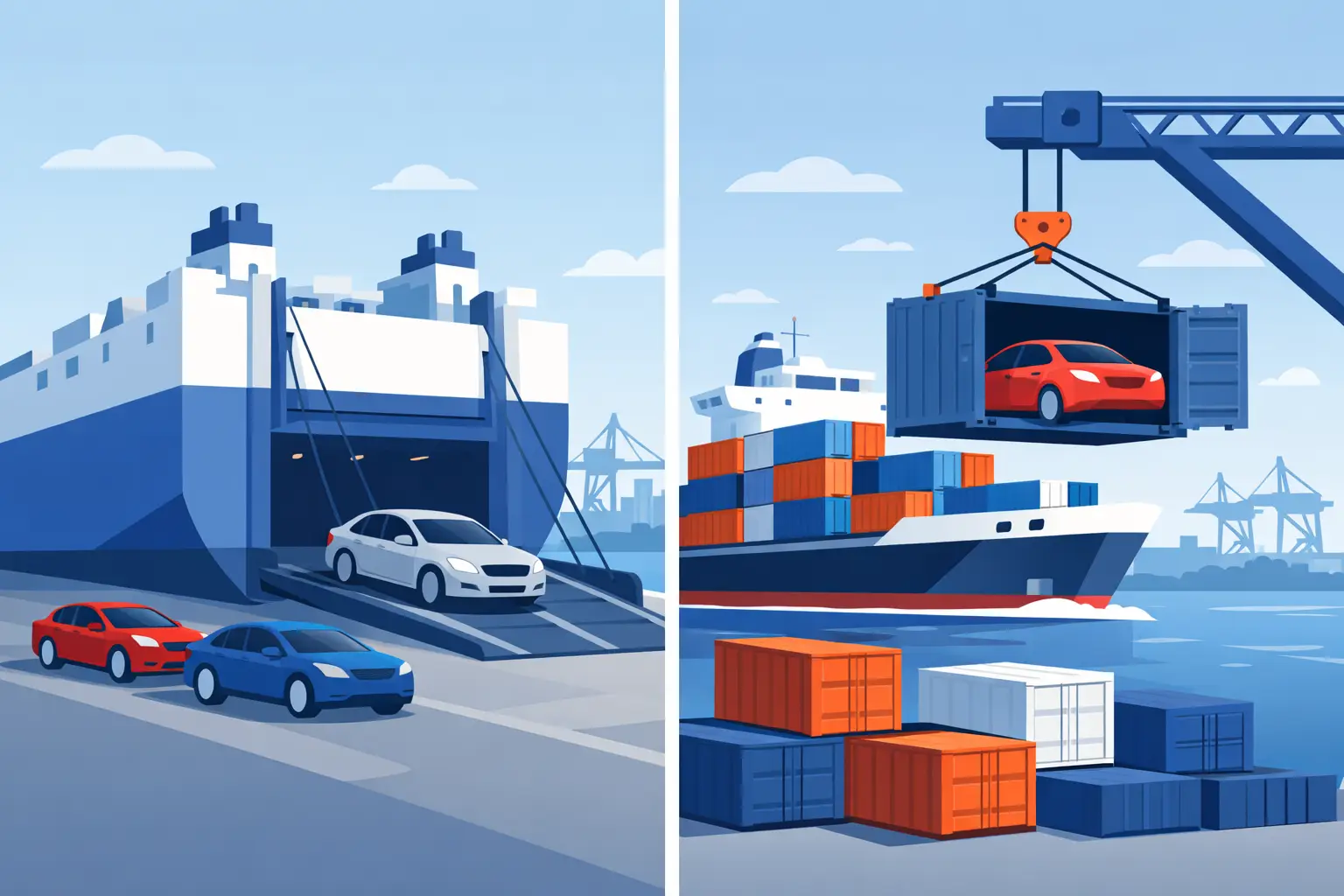
The shipping choice usually gets real right after you win the car. You have the auction sheet, the invoice, the excitement – and then one practical question decides cost, timing, and even how your vehicle arrives: ro ro vs container shipping. If you are importing from Japan, this is not a small detail. It is one of the biggest decisions in the entire process.
For some buyers, RoRo is the clear winner because it is cheaper and straightforward. For others, container shipping is worth every extra dollar because it adds protection, flexibility, or room for parts. The right answer depends on the car, the destination, the port, and your priorities.
What ro ro vs container shipping actually means
RoRo stands for roll-on/roll-off. Your vehicle is driven onto a specialized vessel, secured inside, and then driven off when it reaches the destination port. It is designed for vehicles that can move under their own power, and it is one of the most common methods for exporting used cars from Japan.
Container shipping means the vehicle is loaded into a steel shipping container, usually a 20-foot or 40-foot unit, then secured for ocean transport. In some cases, one car goes into a container by itself. In others, multiple vehicles or a vehicle plus spare parts are packed together, depending on size and route.
That basic difference changes almost everything else – cost, loading procedures, risk profile, and port options.
Ro Ro vs container shipping on cost
If your priority is landing the car at the lowest possible shipping cost, RoRo often comes out ahead. The process is simpler, vessel space is built for vehicles, and there is less labor involved in loading compared with container packing. For many standard used vehicles, that makes RoRo the budget-friendly option.
Container shipping usually costs more. You are paying not only for ocean freight, but also for container handling, loading, securing the car inside, and in some cases unloading or devanning charges at the destination. If you are shipping a single vehicle by container, the price gap can be significant.
But cost is not always that simple. If you are shipping multiple vehicles, sharing a container, or sending a car with extra parts and accessories, container shipping can start to make more financial sense. Dealers and repeat importers sometimes prefer containers for this reason. The upfront price may be higher, but the value can be better depending on the shipment setup.
Which option is safer for your car?
This is where buyers tend to get emotional, and understandably so. If you just bought a rare JDM model, a clean classic, or a high-value performance car, you want the best protection possible.
RoRo is generally safe and widely used, but the car is stored in a shared vessel environment and handled as an operational vehicle. That means it must be able to roll, steer, and brake. Personal items are usually not allowed inside, and access rules are stricter. The vehicle is exposed to more handling than it would be in a sealed container environment, even though it remains inside the ship.
Container shipping gives an added layer of physical protection because the car is loaded and secured inside an enclosed unit. That can reduce exposure during transit and can feel like the smarter choice for expensive, delicate, or highly collectible vehicles. It also helps if you are shipping loose parts, wheels, or other approved accessories together with the car.
Still, safer does not automatically mean necessary. Many vehicles are exported by RoRo every day without trouble. If the car is a normal road vehicle and the route is common, RoRo may be perfectly suitable.
Port availability can decide everything
One of the biggest real-world factors in ro ro vs container shipping is not preference. It is port access.
RoRo service depends on carriers and destination ports that handle vehicle vessels. Not every country or port has the same frequency or availability. Some routes have regular sailings and competitive pricing. Others are limited, delayed, or unavailable for certain units.
Container shipping often gives more route flexibility because containers move through a broader global network. If your nearest receiving port does not support RoRo, or if RoRo schedules are inconsistent, a container may be the more practical path even if it costs more.
This is why experienced exporters do not treat shipping as a generic checkbox. The same car can be easy to send by RoRo to one market and much easier by container to another.
Vehicle condition matters more than many buyers expect
RoRo usually requires a vehicle that can be driven for loading and unloading. If the car does not start, has mechanical issues, or has damage that affects movement, RoRo may not be possible. That immediately pushes the shipment toward container service.
This matters for project cars, accident vehicles, and some auction purchases that are mechanically incomplete. Buyers sometimes focus on winning the bid and only later realize that the shipping method has changed because of the vehicle’s condition.
Container shipping is often better for non-running vehicles because the loading process can be managed differently. It is also useful when ground clearance is very low or the vehicle has modifications that make standard RoRo handling less ideal.
Timing and scheduling
If speed matters, the answer depends on the route and current vessel schedules. RoRo can be efficient on established export lanes, especially for popular destinations where car carriers run regularly. The handling process is also straightforward once the vehicle is booked and cleared.
Container shipping can sometimes involve extra coordination. The vehicle has to be loaded into the container, secured properly, and moved through the container booking process. On the other hand, because container networks are extensive, there are cases where container service offers more frequent sailings than RoRo on a specific route.
So which one is faster? It depends. On busy car-export routes, RoRo may be quicker and simpler. On less common lanes, container shipping may offer better schedule options.
When container shipping makes more sense
If you are importing a rare car, a premium vehicle, a classic, or a unit with added parts, container shipping often earns serious consideration. The enclosed setup appeals to buyers who want extra peace of mind. It can also be the better option for cars that are not operational or need special loading treatment.
Container shipping is also attractive for businesses. If you are moving multiple units, filling a container can create efficiencies that are not obvious when looking only at the cost of a single car.
For first-time buyers, container shipping can feel more secure because it sounds more protected. That instinct is understandable, but it should still be checked against destination cost, port charges, and availability.
When RoRo is the smarter move
RoRo shines when the vehicle is standard, running, and headed to a port with reliable vehicle carrier service. It is often the easiest and most economical method for everyday imports, especially if your goal is to get a solid Japanese vehicle landed without inflating shipping costs.
That makes RoRo especially appealing for budget-conscious buyers, practical daily driver imports, and many auction purchases where keeping the total landed cost under control matters more than having an enclosed container.
If your car does not need special handling and the route is active, RoRo is hard to ignore.
Ro Ro vs container shipping for JDM buyers
JDM buyers often ask this question with a specific kind of car in mind, not just a shipping method. A clean kei truck, a turbo sports coupe, a collectible SUV, or a modified performance build all bring different priorities.
If you are importing a value buy that you want on the road quickly and affordably, RoRo is often the practical winner. If you are bringing in a dream car with rare parts, low production numbers, or a high replacement value, container shipping may be the better fit.
This is where hands-on guidance matters. A good exporter does not push one method across the board. The smarter move is matching the vehicle and the destination to the shipping option that protects your budget and your car.
The mistake to avoid
The biggest mistake is choosing based on a simple rule like “container is always safer” or “RoRo is always cheaper.” Real shipments are not that clean.
Destination port charges can change the math. Vehicle condition can remove one option completely. Sailing frequency can affect delivery time. Extra parts, customs procedures, or local unloading costs can tilt the decision fast.
That is why serious importers look at the full picture before booking. At SKY MARK AUTO, this is exactly the kind of detail that should be handled before the vehicle leaves Japan, not after it becomes an expensive surprise.
If you are deciding between the two, start with the car itself, then the port, then the total landed cost. The right shipping method is the one that gets your vehicle to you with the least friction and the fewest regrets – so you can focus on the part that really matters: enjoying the drive.