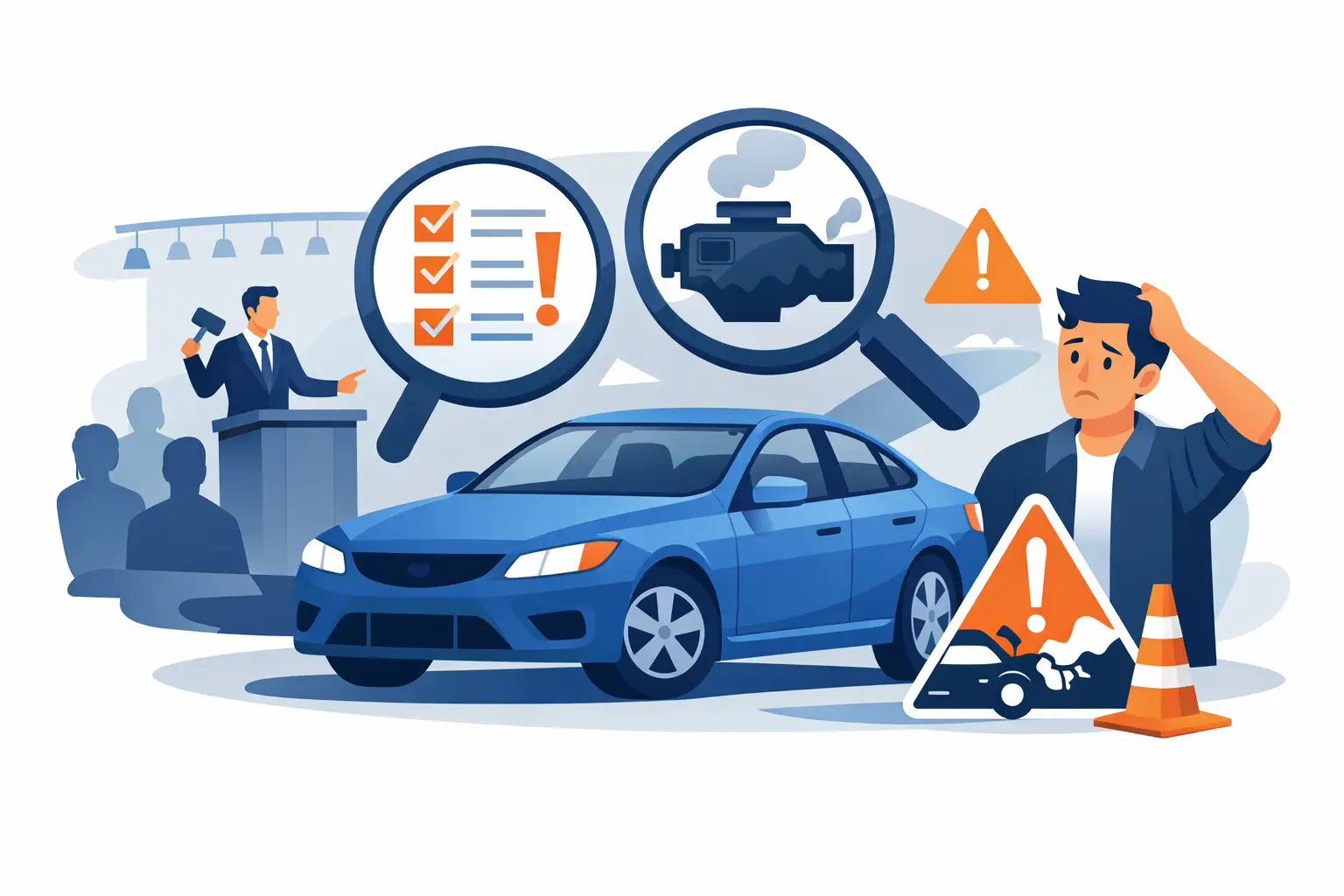
One bad bid can turn a dream JDM buy into an expensive lesson. If you want to know how to avoid auction car mistakes, start by treating every listing like a high-speed decision with real money, real shipping costs, and real import rules attached. The Japanese auction market is packed with opportunity, but the buyers who win consistently are the ones who stay disciplined before they ever raise a paddle.
That matters even more for overseas buyers. You are not standing next to the car, you are not chatting with the auction inspector, and you are not casually fixing a paperwork issue at the local DMV the next day. You are buying across borders, across languages, and often across time zones. That is exactly why a smarter process beats raw enthusiasm every time.
How to avoid auction car mistakes before you bid
The biggest mistake happens before the auction starts. Buyers fall in love with a model, see a low estimated price, and assume they are getting a bargain. Then the fees, inland transport, shipping, repairs, and destination costs show up and change the whole deal.
A strong auction strategy starts with your true budget, not your bid ceiling. There is a difference. Your true budget includes the hammer price, auction fees, agent fees, transport in Japan, ocean freight, insurance if applicable, customs charges, port handling, compliance work, and any maintenance needed after arrival. If you only focus on the auction number, you are setting yourself up for frustration.
The next step is getting clear on your goal. Are you chasing a clean daily driver, a rare collector car, a tuner project, or resale inventory? Each one calls for a different level of risk tolerance. A dealer might accept cosmetic flaws for margin. A first-time importer probably should not. A collector shopping for originality should be far stricter than a buyer looking for a fun weekend platform.
This is where buyers often lose money – they shop emotionally instead of strategically. The smarter move is to define your acceptable mileage, grade range, accident history tolerance, transmission preference, and repair budget before the listings start moving.
Read the auction sheet like your money depends on it
It does. And this is one of the most important lessons in how to avoid auction car mistakes.
A Japanese auction sheet is not decoration. It is the core document that tells you what the inspector saw on the day of inspection. That includes the overall grade, interior grade, mileage, equipment, notes on damage, and the diagram that marks scratches, dents, waviness, corrosion, repairs, and replacement panels.
Many international buyers make the same bad assumption: if the grade looks decent, the car must be clean. Not necessarily. Auction grades are helpful, but they are not a full story on their own. A Grade 4 car can still have issues that matter to you, especially if you care about originality, paint quality, or signs of previous bodywork.
Translation matters here. Small comments in Japanese can completely change your view of a car. Notes about paint fade, aftermarket modifications, oil leaks, underbody corrosion, cigarette smell, seat wear, or replaced panels are easy to miss if you rely on guesswork. A proper translation gives you clarity, and clarity protects your budget.
You also want to compare the written notes with the damage map. If they do not line up cleanly, pause. If the mileage seems unusually low for the age, verify carefully. If the sheet mentions repair history, understand exactly what that means for your market and your comfort level. Not every repaired car is a bad buy, but every repaired car deserves closer scrutiny.
Why photos are not enough
Auction photos can make almost any car look better than it is. Lighting hides scratches. Distance hides panel gaps. A quick interior shot does not tell you much about odors, wear, or switchgear condition. Photos help, but they should support the auction sheet, not replace it.
Buyers who rely on glamour shots often overpay. Buyers who rely on inspection data make sharper decisions.
Know the real landed cost, not just the auction price
This is where first-time importers get blindsided. A car that looks cheap at auction can stop looking cheap once it reaches your port.
The smart question is never, “What did it sell for?” The smart question is, “What will it cost me to land this car legally and safely in my market?” That number is what determines value.
For US buyers, timing, port choice, vehicle age, compliance rules, and local registration requirements can all affect the final picture. Some cars are straightforward imports. Others come with extra complexity that can eat up the savings you thought you had won at auction.
This is why experienced buyers work backward from landed cost. If your total comfortable budget is fixed, your bid must leave room for everything after the hammer falls. Discipline here is powerful. It keeps you from chasing a deal that was never really a deal.
Don’t mistake bidding confidence for bidding skill
Fast auctions create pressure. Cars move quickly, competition spikes, and it is easy to convince yourself that one more bid is harmless. That is how people overpay.
Strong bidding is calm bidding. Set a maximum before the auction and respect it. If the market runs past your number, let the car go. There will be another one. Japan’s auction ecosystem is deep, and patient buyers usually get more value than desperate ones.
This is especially true with popular JDM models. Enthusiasm can drive prices up fast, particularly for turbo cars, manuals, low-mileage examples, special trims, and clean unmodified units. If you have your heart set on a specific spec, expect competition and prepare for it. If you are flexible on color, mileage, or trim, your options widen and your odds improve.
Timing matters more than buyers think
Some weeks bring stronger selection. Some cars draw weekend-warrior money. Some seasonal trends affect demand in export markets. You cannot control the market, but you can avoid forcing a purchase when the conditions are working against you.
A rushed buyer usually pays more or settles for less.
Verify eligibility before you fall in love with the car
This sounds obvious, but it is one of the costliest mistakes in the business. Not every vehicle that looks attractive at auction is the right fit for your country’s import rules.
For US buyers, age and compliance are critical. Beyond eligibility, there are practical questions. Can you register it in your state without a headache? Is the model easy to insure? Are parts available? Will your local shop actually want to work on it? A rare auction find can be thrilling, but the ownership experience still has to make sense after the car arrives.
This is where support matters. A reliable export partner helps you filter out cars that may be legal to buy but problematic to import, register, or own. That saves money, but more importantly, it saves months of stress.
The safest way to avoid auction car mistakes is to use expert support
There is a reason serious international buyers do not try to decode the entire process alone. Auction buying is not just about picking a car. It is about reading inspection language correctly, understanding values, controlling bidding, preparing documents, arranging transport, and keeping the process moving without preventable delays.
That is where SKY MARK AUTO gives buyers a real edge. Instead of guessing your way through live Japanese auctions, you can move with translated auction intelligence, guided bidding support, transparent fee framing, and end-to-end export handling. That means fewer surprises, stronger decisions, and a much better chance of getting the car you actually thought you were buying.
Good support does not remove every risk. No honest exporter should promise that. What it does is dramatically reduce avoidable mistakes. It gives you context around condition, pricing, and logistics so you can buy with confidence instead of hope.
A smart buyer stays excited and stays careful
That balance is the whole game. The Japanese auction market is one of the best places in the world to find value, variety, and authentic JDM inventory, but excitement alone is not a buying strategy. The winning approach is simple: know your target, verify the sheet, calculate the full cost, respect your bidding limit, and make sure the car fits your market before you commit.
Import the thrill, but protect the investment. The best auction wins are not the flashiest ones. They are the cars that arrive, clear, register, and make you glad you were patient enough to buy the right way.