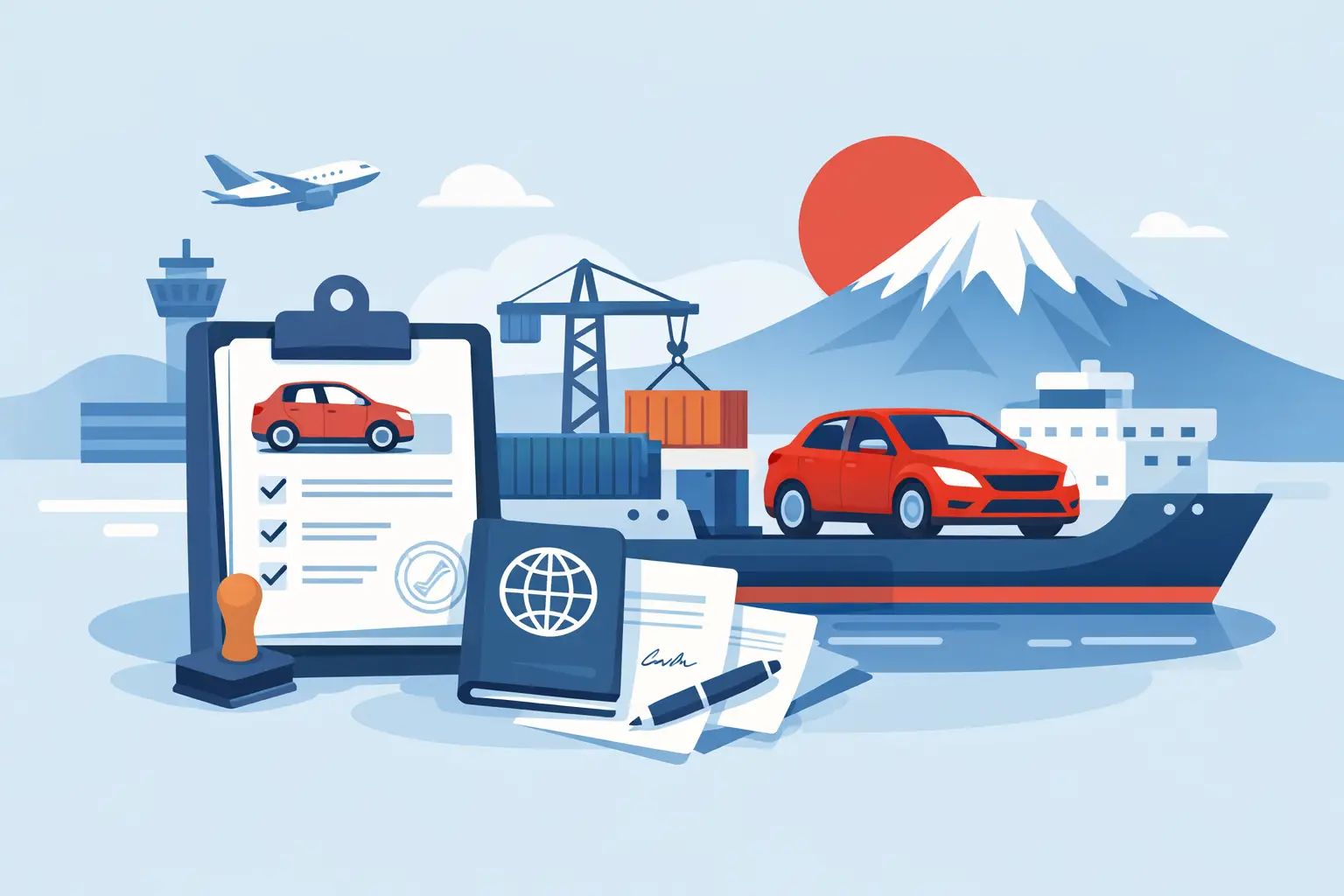
A winning auction bid is exciting. But before your Japanese vehicle can leave the port, the paperwork must be right. To prepare car export documents properly, every detail must match: the buyer name, VIN or chassis number, vehicle description, destination, and shipping instructions. A single mismatch can hold up a vessel booking, create customs questions, or delay the moment your JDM car arrives.
That is why the export process should never be treated as an afterthought. The right documents protect your purchase, prove legal ownership, support customs entry, and keep your import moving with confidence from Japan to your destination port.
What Car Export Documents Actually Do
Export documents create the official trail behind your vehicle. They show that the car was purchased legally, deregistered for export where required, declared to Japanese authorities, loaded for international transport, and assigned to the correct buyer.
Some documents are created in Japan by the exporter. Others are required by the shipping line or your country’s customs authority. The exact package depends on the vehicle, destination, port, and local import rules. A kei truck headed to the United States, for example, may need a different destination-side compliance process than a vehicle shipped to the Caribbean, Africa, or Oceania.
The key is not collecting paperwork for its own sake. It is making sure every document tells the same, accurate story about one specific vehicle.
Start With Correct Buyer and Vehicle Details
Documentation begins long before the car reaches the port. At the auction or purchase stage, confirm how the buyer’s legal name should appear on export and shipping paperwork. If the vehicle will be titled by an individual, use that person’s full legal name. If a dealer or company is importing it, use the registered business name exactly as required in that market.
The chassis number deserves the same attention. Many Japanese domestic market vehicles use a chassis or frame number rather than a 17-character VIN familiar to American buyers. Do not guess, shorten, or retype this number from memory. Use the number shown on the auction sheet, purchase record, and deregistration paperwork, then verify it again before shipping.
You should also settle the destination details early: the receiving port, consignee name, contact information, and whether the vehicle is going to a customs broker, dealer, or private buyer. Changing these details after booking can be possible, but it may involve fees and can slow the release process.
The Core Documents for Exporting a Car From Japan
When you prepare car export documents, several records typically form the backbone of the shipment. Your exporter should explain what each one is for and provide copies before the vehicle arrives.
Commercial Invoice
The commercial invoice records the sale. It normally identifies the seller and buyer, vehicle make and model, chassis number, year, purchase price, freight terms where applicable, and destination.
Customs authorities may use the invoice to assess duty, taxes, or declared value. It needs to be truthful and consistent with the actual transaction. A low declared value might look tempting, but inaccurate invoices can result in penalties, delayed clearance, insurance problems, or a difficult resale record later.
Export Certificate or Deregistration Record
For a registered vehicle leaving Japan permanently, export deregistration is a central step. The resulting export certificate or deregistration documentation supports the fact that the vehicle has been removed from Japanese registration for export.
This record can be especially important for title work in the destination country. Keep the original safely once it is released, because replacement options may be limited and procedures differ by authority.
Not every vehicle follows the same path. Some inventory may be unregistered, and certain equipment or specialty vehicles can have different documentation. A reliable exporter will identify the correct route based on the vehicle’s status rather than forcing every purchase into one process.
Bill of Lading
The bill of lading is issued by the shipping line after the vehicle is shipped. Think of it as the transport document connecting the vehicle, the ocean carrier, and the named consignee. It includes the vessel, voyage, port of loading, port of discharge, and vehicle identification details.
For many imports, the bill of lading is essential to claim the vehicle at the destination. Check the consignee and chassis number as soon as the draft is available. A correction after the final document is issued may require carrier approval, extra time, and added cost.
Packing List and Shipping Details
A packing list is more common with container shipments, especially when a vehicle travels with approved spare parts or personal cargo. It identifies what has been loaded and how it is packed. For roll-on/roll-off shipping, the vehicle is usually shipped on its own, but shipping instructions and condition records still matter.
Personal items inside a vehicle create risk. Many carriers and ports restrict them, and undeclared cargo can trigger inspections or refusal. If you are shipping anything beyond the vehicle, get written confirmation on what is allowed and make sure the paperwork reflects it.
Auction Sheet and Purchase Records
The auction sheet is not normally a replacement for an export certificate or bill of lading, but it is valuable supporting evidence. It records the auction grade, inspector notes, mileage reading, repairs, and disclosed condition at the time of sale.
For enthusiasts buying a rare turbo model, a classic 4×4, or a clean family van, this record helps preserve the story behind the purchase. It can also be useful if a lender, insurer, future buyer, or customs official asks for more context. Translation matters here. Japanese auction notes can be brief, technical, and easy to misunderstand without experienced support.
Do Not Confuse Japanese Export Paperwork With U.S. Import Compliance
Japan-side export paperwork gets the vehicle onto the ship. U.S. import paperwork helps get it through the port and into your hands. They are connected, but they are not the same job.
For U.S. buyers, the vehicle’s age and compliance status are critical. A vehicle that is at least 25 years old can generally qualify for the federal age-based exemption from certain safety standards, but you still need to complete the required import declarations accurately. Environmental rules, state registration requirements, and local taxes can also apply.
Depending on the vehicle and your entry process, U.S. paperwork may include a DOT declaration, an EPA declaration, customs entry documents, proof of value, and the bill of lading. A customs broker can advise on the destination-side filing, while your Japanese exporter provides the source documents needed to support it.
Do not assume that a vehicle being legal to import federally means it is automatically simple to register in every state. California and several other jurisdictions can have additional requirements. Confirm your state rules before bidding, especially if you are buying a newer vehicle or planning a special-use import.
A Better Workflow Before the Vehicle Ships
The easiest way to avoid documentation trouble is to confirm responsibilities before the purchase is finalized. Your exporter should clearly state what they prepare in Japan, what the shipping line issues, what originals will be sent, and what you or your broker must handle after arrival.
Before shipment, review the buyer name, chassis number, vehicle year, model, sale price, port of discharge, and consignee details. Then make sure you understand the shipping method. Container shipping may offer more control and protection for some vehicles, while roll-on/roll-off can be more cost-effective for drivable units. The right choice depends on your budget, port options, and the vehicle itself.
At SKY MARK AUTO, buyers receive hands-on support from auction translation and bidding through Japan-side documentation and port delivery. That support matters because paperwork should follow the vehicle’s real journey, not a generic checklist copied from another shipment.
Keep Originals Safe and Digital Copies Organized
Once documents are issued, store digital copies in one folder and keep original paperwork protected from water, loss, and accidental damage. Label files with the chassis number, not just the model name. If you import multiple vehicles, that small habit prevents expensive mix-ups.
Send copies to your broker early if they request them. Waiting until the vessel arrives can turn a routine clearance into storage charges at the port. It is also smart to keep the auction sheet, invoice, export certificate, and bill of lading together for future registration, insurance, service history, or resale.
The thrill of importing from Japan should build as your vehicle gets closer, not disappear into a paperwork scramble. Ask questions early, verify every number twice, and work with people who understand both the auction floor and the export desk. When the documents are handled with care, your next Japanese import is ready to make the journey it deserves.