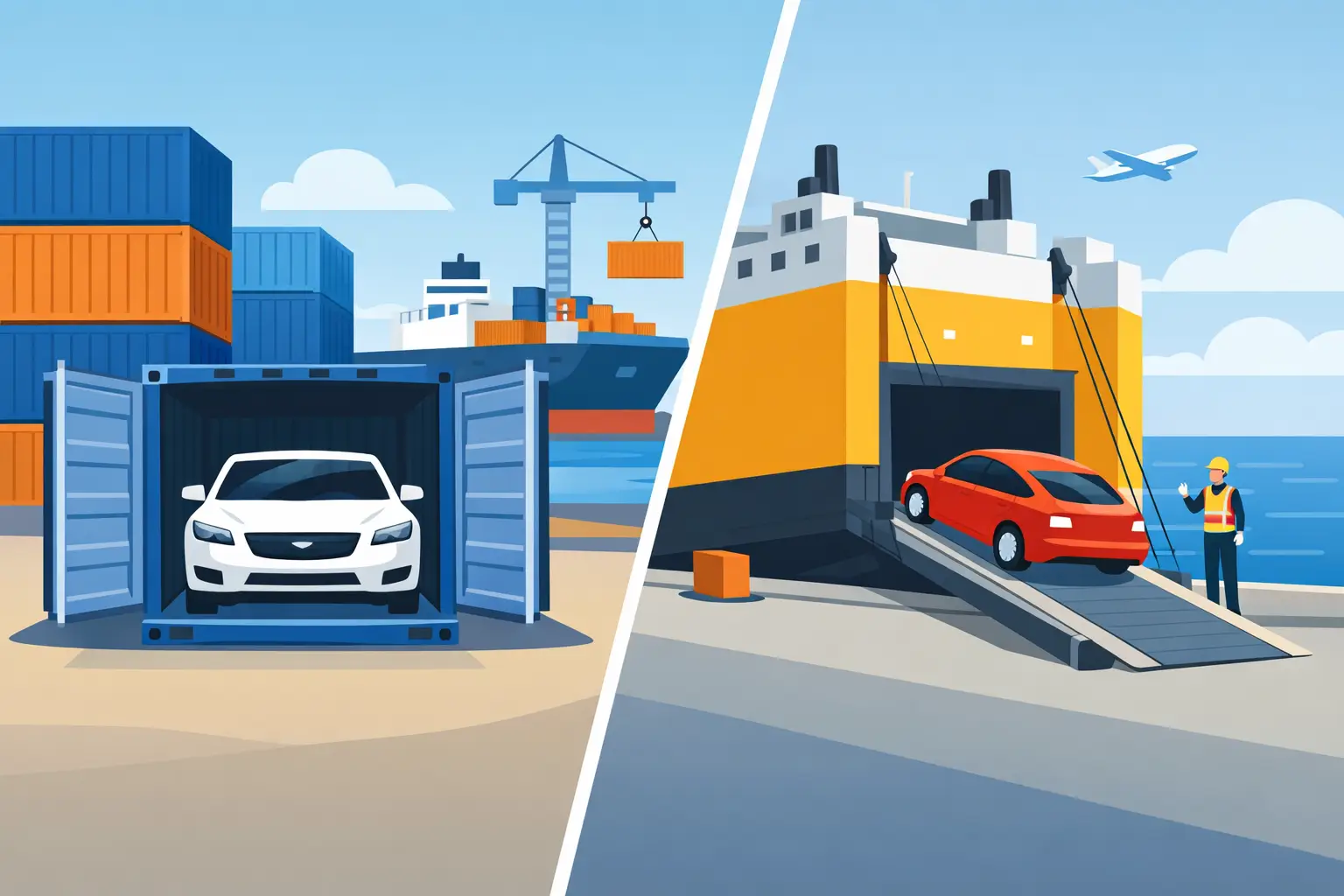
A clean auction-grade JDM car can feel like a huge win right up until you reach the shipping decision. Container versus RoRo shipping is not simply a question of picking the cheaper quote. It affects how your vehicle is handled, what you can ship with it, which destination ports are available, and how confident you feel while your purchase crosses the ocean.
For many buyers importing from Japan, RoRo is the practical default. For others, especially buyers moving rare, modified, non-running, or multiple vehicles, a container is the smarter play. The right answer comes down to your car, your port, your budget, and how you want the shipment managed.
Container Versus RoRo Shipping: The Real Difference
RoRo means roll-on/roll-off. Your vehicle is driven onto a purpose-built vessel, secured in an enclosed vehicle deck, and driven off at the destination port. These ships are designed to carry cars, trucks, vans, and machinery in volume. Think of it as vehicle-only transport built for efficient loading and unloading.
Container shipping places your car inside a steel shipping container. Depending on the booking, it may travel alone in a 20-foot or 40-foot container, or share a container with other vehicles. The vehicle is secured with straps, wheel chocks, and bracing before the container is sealed and moved by truck, rail, and ship through the freight network.
Neither method is automatically better. RoRo is usually more direct and cost-effective when the vehicle is drivable and your destination has a suitable RoRo port. Containers offer more control and flexibility, but they often bring higher freight charges and more handling at each end.
When RoRo Shipping Makes Sense
RoRo is a strong option for a standard, operational vehicle headed to a major import port. If you have bought a stock Toyota, Nissan, Honda, Subaru, or kei truck from Japan and want to get it to a port efficiently, RoRo often delivers the best value.
The process is straightforward. Your car is delivered to the Japanese departure terminal, inspected for acceptance, loaded onto the vessel, and discharged at the destination port. Because RoRo carriers transport large numbers of vehicles on a single sailing, the per-car shipping cost can be attractive compared with reserving container space.
RoRo can also mean less packing work. There is no need to load a container, build internal bracing, or coordinate shared-container consolidation. That simplicity matters for first-time importers who want the focus to stay on choosing the right auction vehicle, reviewing its condition, and preparing the correct import documents.
There are limits. Most RoRo carriers require the vehicle to start, steer, brake, and roll safely. A non-running project car, a severely damaged auction purchase, or a vehicle with mechanical issues may be refused. RoRo operators also generally prohibit personal belongings, loose parts, and spare wheels inside the cabin. The car needs to be clean and ready for port handling.
RoRo schedules can be excellent for major ports, but coverage varies. If your closest port does not receive regular RoRo vessels, transporting the car inland after arrival may erase some of the upfront savings.
When Container Shipping Is Worth the Extra Cost
Container shipping is often the better choice when your vehicle needs more than standard vehicle transport. A container can be especially useful for rare classics, high-value collector cars, non-operational vehicles, and shipments that include approved parts or equipment.
A 20-foot container commonly suits one vehicle. A 40-foot container may accommodate two vehicles, depending on their dimensions and the loading plan. Sharing container space can lower the cost per vehicle, which makes containers particularly appealing to small dealers, resellers, or buyers importing multiple compact Japanese cars at once.
The biggest advantage is control. Once the vehicle is professionally secured and the container is sealed, it is protected from weather and separated from normal port traffic until the container is opened at destination. That does not make container shipping risk-free. Containers can be moved several times through a complex freight chain, and improper loading is a real concern. The quality of the loading and securing process matters greatly.
Container shipping can also solve the non-running problem. A project vehicle may be loaded using specialized equipment rather than driven onto a RoRo vessel. If you are buying an auction car with engine trouble, accident damage, or an unfinished restoration, this can be the difference between shipping it now and waiting for costly repairs in Japan.
However, container freight is not always faster. Shared containers may need time for consolidation, and destination procedures can involve unpacking appointments, warehouse charges, and different pickup arrangements. A lower ocean rate does not always equal a lower total landed cost.
Compare Total Cost, Not Just the Freight Quote
A RoRo quote and a container quote can look dramatically different, but the line item labeled “shipping” is only part of the equation. The smarter comparison includes every required step from Japan to the destination port and beyond.
With RoRo, look at the ocean freight, Japanese port handling, export documentation, destination port charges, customs entry, duty and taxes where applicable, and inland transport. With containers, add loading, securing, container handling, possible consolidation fees, destination devanning or unpacking, and storage risk if the container is not collected on time.
Your vehicle size changes the math. A compact kei car may be very economical by RoRo, while two compact cars in a shared 40-foot container may create excellent value for a business buyer. A large SUV or pickup may consume expensive container space, making RoRo the clear winner if service is available.
Do not assume a container provides a license to fill the vehicle with personal belongings. Destination-country rules, carrier policies, customs requirements, and quarantine controls can all apply. Shipping unapproved items can delay release, create extra inspection costs, or cause more trouble than any savings are worth.
Protection, Condition, and Peace of Mind
Many buyers choose a container because they want maximum protection for a prized vehicle. That instinct makes sense, especially for a limited-production JDM model or a carefully preserved classic. A sealed container reduces exposure during the sea voyage and limits access after loading.
Still, the most important protection begins before the car reaches the port. Review auction sheets carefully, request condition details, document the vehicle with photos, and make sure any concerns are addressed before shipping. A clear record of the vehicle’s pre-shipment condition is valuable whether you choose container or RoRo.
RoRo vessels have enclosed decks, not open-air parking lots. Vehicles are secured for transit and handled by trained port personnel. For an ordinary drivable import, RoRo is a proven global method used for enormous volumes of vehicles every year. It should not be treated as a second-rate option simply because it is often less expensive.
Insurance deserves the same attention. Marine cargo coverage, exclusions, deductible amounts, and the claims process should be understood before the vessel departs. The shipment method matters, but good documentation and the right coverage are what protect your financial position if something unexpected happens.
Destination Ports Can Decide the Answer
Your location may settle the container versus RoRo shipping question before you even select a car. RoRo works best through ports with regular vehicle-carrier service and established import procedures. If you live within reasonable hauling distance of one of those ports, the process can be efficient and predictable.
Container service reaches a wider range of freight ports, which can be helpful if you are inland or located near a port without consistent RoRo sailings. But availability is not the only issue. Ask how the vehicle will be released, whether you need a customs broker, where the container will be unpacked, and how quickly it must be collected to avoid storage charges.
For US buyers, also confirm that the vehicle itself is eligible for import before bidding. Age, emissions, safety rules, title documentation, and state registration requirements can affect your plan. Shipping is only one part of bringing home the Japanese vehicle you want.
Choose the Method That Fits the Car and the Plan
Choose RoRo when your vehicle is running, you are shipping one standard car, your destination port offers regular service, and keeping the total cost disciplined is a priority. It is often the cleanest route from Japanese auction purchase to port delivery.
Choose a container when the vehicle cannot be driven, requires special handling, is particularly valuable, or is being shipped with another vehicle as part of a carefully planned load. It can also be the right answer when container service is simply more practical for your destination.
The best shipping choice should be made before you bid, not after you have won the auction. At SKY MARK AUTO, that means looking at the vehicle, route, destination requirements, and expected charges together so there are fewer surprises after the hammer falls.
Your Japanese import should arrive as the reward for a smart purchase, not become a logistics headache. Pick the shipping method that protects your budget, respects your vehicle’s condition, and gives you a clear path from auction floor to your driveway. Then you can focus on what matters most: getting behind the wheel and embracing the drive.