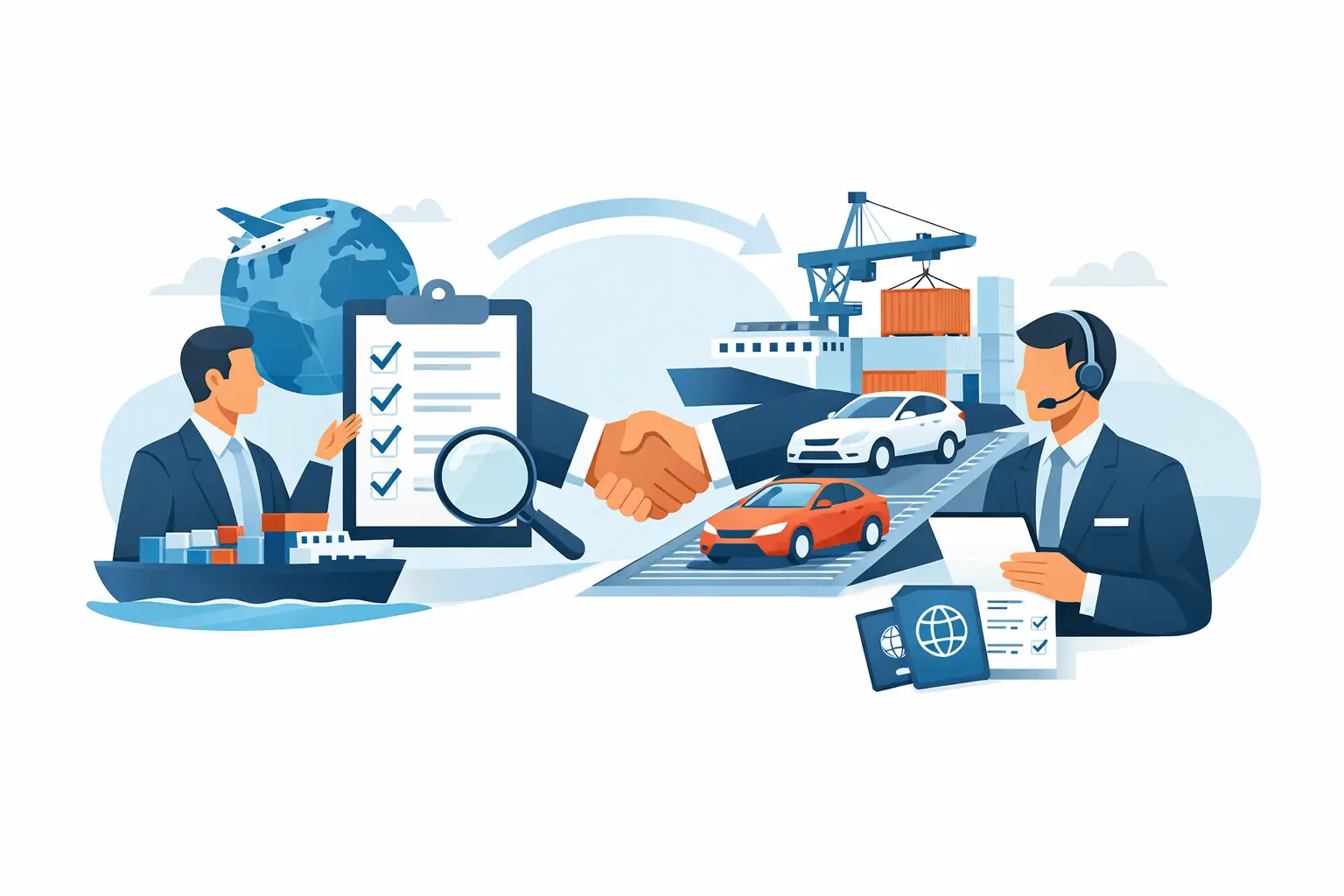
The wrong export agent can turn your dream car into a long, expensive headache. The right one can make buying from Japan feel clear, fast, and exciting. If you are trying to figure out how to choose export agent support for a used or new vehicle import, the real test is simple: can this company protect your money, explain the process, and get your car from Japan to your port without confusion?
That matters even more with Japanese auction buying. You are not just choosing someone to send a car overseas. You are choosing a partner to inspect details, translate auction information, manage payment, handle paperwork, book shipping, and keep you informed when timing changes. A flashy website is easy to build. A dependable export process is much harder.
How to choose export agent without costly mistakes
Start by looking at what the agent actually controls. Some companies market themselves as exporters, but they are really just middlemen passing your request to someone else. That creates delays, miscommunication, and finger-pointing if a problem comes up. A stronger export agent has direct operational involvement in Japan and can clearly explain how bidding, purchasing, inland transport, document handling, and shipping are managed.
Ask direct questions early. Do they have access to Japanese auto auctions? Can they provide auction sheet translations before bidding? Who handles deregistration and export documents? What shipping methods do they offer? If the answers are vague, your risk goes up fast.
Experience matters, but relevant experience matters more. An agent that exports industrial equipment is not automatically a great fit for JDM cars, kei trucks, family vans, or late-model hybrids. Vehicle exporting has its own pressure points, including auction grading, chassis verification, condition expectations, port scheduling, and destination-country rules. You want a team that lives in this lane every day.
Judge transparency before you judge price
A lot of buyers start with fees, and that makes sense. Everyone wants a strong deal. But the cheapest quote is often the most expensive mistake if the pricing is incomplete.
A trustworthy export agent should explain costs in plain language. That usually includes the vehicle price, auction or bidding-related charges, agent fees, inland transport in Japan, shipping, and documentation costs. Some destination-side charges may still depend on your country, port, customs broker, and local taxes, so no honest exporter should pretend everything is fixed in every case.
This is where trade-offs matter. One agent may show a lower service fee but leave you guessing about inland transport or document charges until later. Another may quote a slightly higher total upfront but give you far more certainty. For many buyers, especially first-time importers, clarity is worth real money.
If an agent avoids written estimates, changes numbers casually, or cannot explain what is included, move on. Confidence should come from transparency, not pressure.
Look for real auction and vehicle support
When you buy from Japan, access is only half the story. Interpretation is the other half. A strong export agent does more than submit bids. They help you understand what you are bidding on.
That means auction sheet translation, condition review, and realistic guidance on value. If a car has repaired history, corrosion, interior wear, warning lights, missing accessories, or non-original modifications, you should know before you commit. Great agents do not hide flaws to keep the sale moving. They flag risks so you can buy with open eyes.
This is especially important for enthusiasts chasing rare JDM models. The right grade, trim, drivetrain, and modification history can change a car’s value dramatically. For dealers and resellers, consistent condition reporting matters just as much because margins get crushed when surprises show up at the port.
An export agent should also know when to tell you not to bid. That kind of honesty is a strong sign. Anyone can push you into a sale. A real partner protects you from bad inventory.
Communication is not a bonus feature
If you are overseas, communication is part of the product. You should not have to chase basic updates after sending thousands of dollars across borders.
Pay attention to how the company communicates before you pay anything. Are they answering your actual questions, or sending generic responses? Can they explain timelines in a way that makes sense? Do they provide support in clear English? If a company is disorganized during the sales stage, it rarely becomes more organized once your money is in motion.
Speed matters, but clarity matters more. A fast reply that says nothing useful is not real support. You want an export agent that can walk you through bidding, payment deadlines, shipping options, and document flow without making the process feel like guesswork.
Multilingual support is another advantage, especially when a company works directly with Japanese systems and international buyers every day. Misunderstandings in vehicle details or paperwork can cost weeks.
Check the shipping process, not just the sale
Many buyers focus hard on winning the car and barely think about what happens after. That is where weak exporters get exposed.
Ask how the agent handles shipping bookings and port delivery. Do they offer RoRo, container shipping, or both where applicable? Can they explain the pros and cons? RoRo can be cost-effective for many standard vehicles, while container shipping may suit higher-value cars, parts, or specific destination needs. There is no universal best option. It depends on the vehicle, route, budget, and level of protection you want.
You should also ask what documents you will receive and when. For most car exports, document accuracy is critical. Errors on the bill of lading, export certificate, invoice, or related paperwork can create customs trouble in your destination country. A dependable export agent treats documentation as a core responsibility, not an afterthought.
This is where a full-service company stands out. When one team coordinates the purchase, inland movement, export formalities, and shipping, the handoff points are fewer and the process is usually smoother. That does not guarantee perfection, but it reduces the number of places where details get lost.
Reputation should be specific, not vague
Plenty of companies claim to be reliable. Look for proof that matches your kind of purchase.
General praise is nice, but detailed buyer feedback is more useful. Did customers mention auction help, translation support, fee clarity, shipment updates, or document handling? Did they import to the US or other markets with similar requirements? Did first-time buyers feel guided, and did experienced buyers feel respected?
Consistency is the signal you want. One or two glowing comments do not mean much if the rest are thin or generic. On the other hand, repeated mentions of honest communication, smooth export handling, and accurate vehicle descriptions are powerful indicators.
It also helps to see whether the company understands destination-market concerns. US buyers, for example, often need clearer guidance on eligibility, paperwork, and import timing than someone buying into a market with different rules. The agent does not need to be your customs broker in every country, but they should understand where their role starts and ends.
Red flags when choosing an export agent
Some warning signs show up quickly if you know where to look. Be careful if the company pushes you to send money before explaining the process, avoids giving company details, or gives inconsistent answers about fees and shipping. Be equally cautious if they promise every car is a bargain or suggest auction grades tell the full story. They do not.
Another red flag is pressure selling around urgency. Yes, auctions move fast. Yes, good inventory gets snapped up. But a serious export agent can still explain your options, discuss risks, and let you make a confident decision. Pressure is not expertise.
Watch for overpromising on timelines too. Shipping schedules change. Port congestion happens. Document processing can vary. A professional exporter sets realistic expectations and updates you when conditions shift.
The best export agent feels like a buying partner
The strongest answer to how to choose export agent support is this: choose the company that makes the process more transparent, not more mysterious. You want direct market access, clear fees, honest vehicle guidance, reliable communication, and complete handling of the export workflow.
For many buyers, that means choosing a team that does more than process transactions. It means working with specialists who understand Japanese vehicles, live auctions, and the logistics chain from bidding lane to destination port. That is the difference between simply buying a car and importing with confidence. SKY MARK AUTO is built around that hands-on model because serious buyers need more than access – they need expert support at every step.
Your next car from Japan should feel exciting for the right reasons. Pick an export agent that treats your purchase like a responsibility, not just a sale, and the entire journey gets a lot easier.