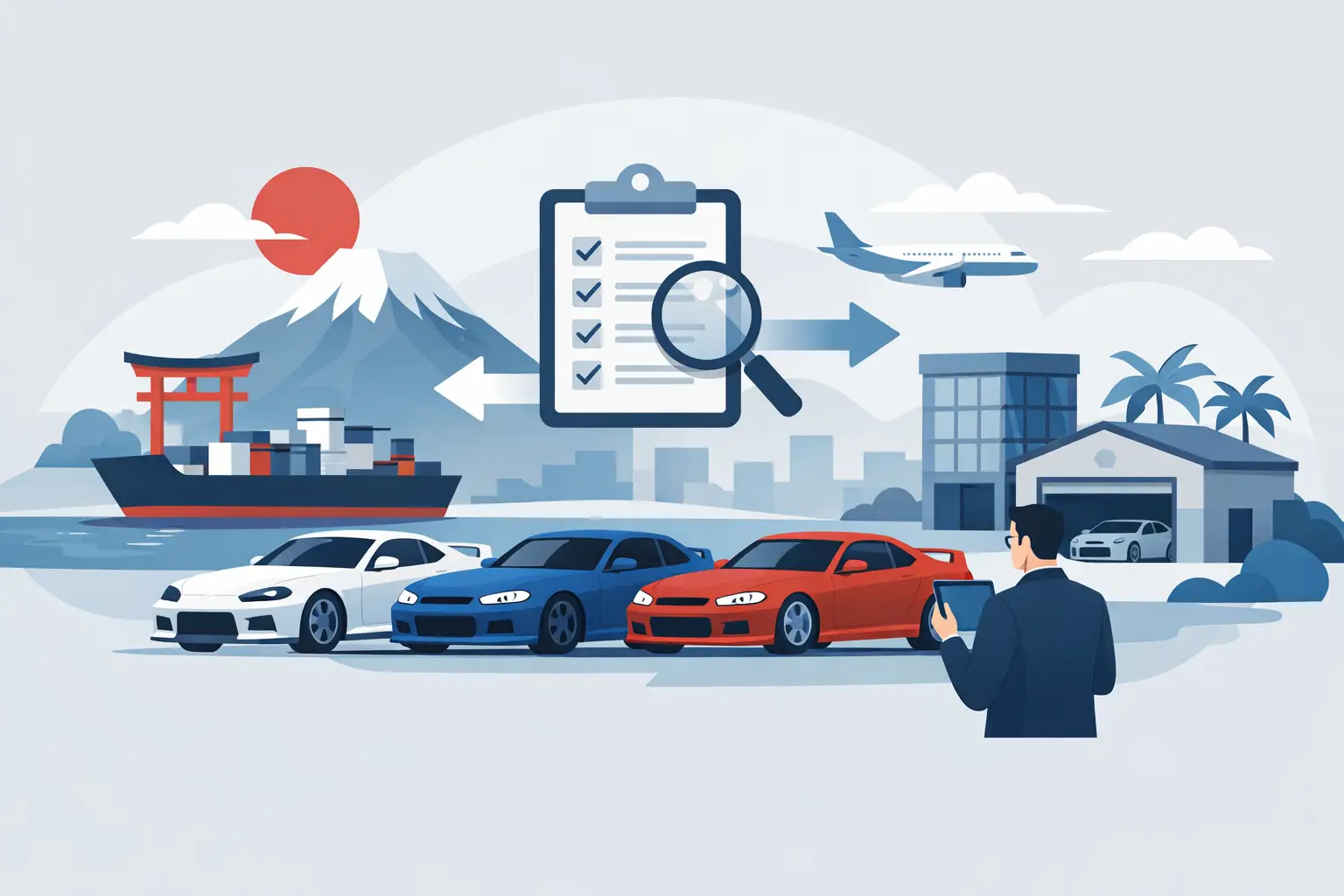
You can spot weak jdm import companies fast – vague fees, slow replies, no auction guidance, and a lot of promises once the sale is already halfway done. That might be survivable if you are buying a common commuter car. It is a much bigger problem when you are chasing a JDM icon, a clean auction-grade vehicle, or a hard-to-find spec that only shows up in Japan for a short window.
That is why choosing the right importer is not a side detail. It shapes what you can buy, how much you really pay, and whether the process feels exciting or exhausting. For buyers in the US and other export markets, the best partner does more than ship a car. They give you direct access to Japan, clear translation, honest cost framing, and support that stays strong from first search to port delivery.
What good jdm import companies actually do
A lot of buyers assume all importers offer basically the same service. They do not. Some are little more than brokers who forward a few listings and then disappear into email silence once money moves. Others operate as true end-to-end export partners with access to live auctions, dealer stock, documentation handling, inland transport, booking coordination, and communication that keeps you informed at every stage.
That difference matters because importing from Japan is not one single transaction. It is a chain of decisions. You need to identify the right vehicle, understand the auction sheet, judge condition realistically, bid at the right level, confirm fees, prepare export documents, arrange shipping, and make sure the destination-side process is clear. If one link is weak, the whole experience suffers.
Strong jdm import companies reduce friction at every step. They make Japanese inventory more accessible to overseas buyers, especially people who do not speak Japanese and do not want to interpret auction notes on guesswork. They also help you avoid the expensive mistake of buying based on photos alone.
The real difference between a broker and a full-service exporter
This is one of the most important distinctions buyers miss.
A basic broker may help you place a bid or locate a vehicle, but the service often stops there. You may be left figuring out timelines, shipping options, export paperwork, and status updates with minimal support. That model can work for experienced trade buyers who already know the system and are comfortable filling the gaps themselves.
A full-service exporter handles the process with far more control. That usually includes auction access, sheet translation, bidding support, invoice clarity, transport to port, export documentation, and shipping coordination. For first-time importers, that kind of support is not a luxury. It is often the difference between confidence and confusion.
If you are comparing companies, ask yourself a simple question: are they just helping me buy a car, or are they helping me import it properly? The answer tells you a lot.
How to evaluate jdm import companies before you commit
Start with inventory access. If a company only shows a small fixed list, your options may be limited to what they already control. That can be fine if the exact car you want is sitting there, but most buyers want broader access. Companies connected to live Japanese auctions and domestic market supply can source far more vehicles, often at better price points.
Next, look at auction support. This is where serious import partners separate themselves from flashy websites. A translated auction sheet is valuable, but translation alone is not enough. You also want context. Is that repair note minor or expensive? Does the grade reflect normal wear for the age, or is there hidden risk? A strong exporter helps you read between the lines.
Then look at communication. Fast replies are great, but clarity matters more. If your questions about total cost, shipping method, eligibility, or timeline get vague answers, pay attention. Good importers know buyers need straightforward information before placing a bid, not after money is already committed.
Fee transparency is another major test. Importing always includes multiple cost layers, and that is normal. The problem is not that fees exist. The problem is when they appear in pieces or stay undefined until late in the process. Reliable companies explain their service charges, shipping estimates, port-related costs, and documentation handling in plain terms.
Price matters, but cheap is not always cheap
Everyone wants a great deal. That is part of the appeal of buying from Japan in the first place. The market offers incredible value, unique trims, and better access to authentic JDM vehicles than most overseas markets can match.
But the lowest quoted price is not always the smartest buy. Some companies win attention with a thin headline number, then stack on fees, weak support, or poor inspection guidance later. Others may charge a little more for service but save buyers money by steering them away from bad auction cars, overpriced bidding, or preventable shipping problems.
A good importer helps you understand total landed cost, not just the vehicle hammer price. That includes export fees, inland transportation in Japan, ocean freight, and any destination-side considerations you should be ready for. When the full picture is clear, you can compare options honestly.
Why auction expertise is such a big deal
Japanese auto auctions are one of the best ways to access variety and value, but they are not beginner-friendly. Listings move fast. Condition notes are short. Terminology can be technical. Photos do not tell the full story. If you are relying on guesswork, you are taking on more risk than you need to.
Experienced import companies know how to match buyer goals with auction reality. If you want a collector-grade car, they know where standards need to be higher. If you want a budget-friendly daily driver, they can help you target value without expecting perfection. If you want a performance model, they can spot the difference between tasteful modification and potential abuse.
This is where a hands-on company earns its place. The strongest partners are not just order takers. They are advisors who protect your budget and help you buy with confidence.
Shipping and paperwork should not feel like a black box
Excitement usually peaks when you win the car. Anxiety usually starts right after if the exporter does not have a clear logistics process.
Shipping is not glamorous, but it is where trust gets tested. Buyers need to know what happens after purchase, how long inland transport may take, when the vessel booking happens, what documents are issued, and what they should expect before arrival at the destination port. Silence during this stage is frustrating and avoidable.
The best companies make this part feel organized and predictable. They explain the workflow, keep you updated, and provide the paperwork needed for export and customs handling on the Japan side. That support is especially valuable for first-time buyers who are excited about importing but do not want to wrestle with every administrative detail alone.
Who benefits most from full-service jdm import companies
The obvious answer is first-time importers, but they are not the only ones.
Enthusiasts benefit because they often care about trim codes, originality, mileage credibility, and auction condition more than average buyers. A company that understands enthusiast expectations can save a lot of wasted time.
Dealers and resellers benefit because reliable sourcing and process consistency matter when inventory planning is on the line. If you are buying more than one vehicle, communication and operational discipline become even more important.
Even experienced import buyers often prefer a stronger service model because it frees up time. Direct market access is valuable, but so is having a capable team handle the heavy lifting with speed and accuracy.
What a strong importer relationship feels like
It feels clear. It feels responsive. It feels like someone is actually watching the details that could cost you money or create delays.
You should know what you are bidding on, what you are paying for, what comes next, and who to contact when you need answers. That sounds simple, but it is exactly where weaker companies fall short.
A company like SKY MARK AUTO stands out when it combines auction access, multilingual support, transparent process guidance, and complete export handling into one practical service. That is the kind of support that lets buyers focus on the thrill of the car without getting buried in the mechanics of importing it.
The right importer does not just help you buy from Japan. They help you buy smarter, with fewer surprises and more control. When you find a team that treats your purchase like a serious investment instead of a quick transaction, the whole experience changes – and that is when importing starts to feel as exciting as it should.