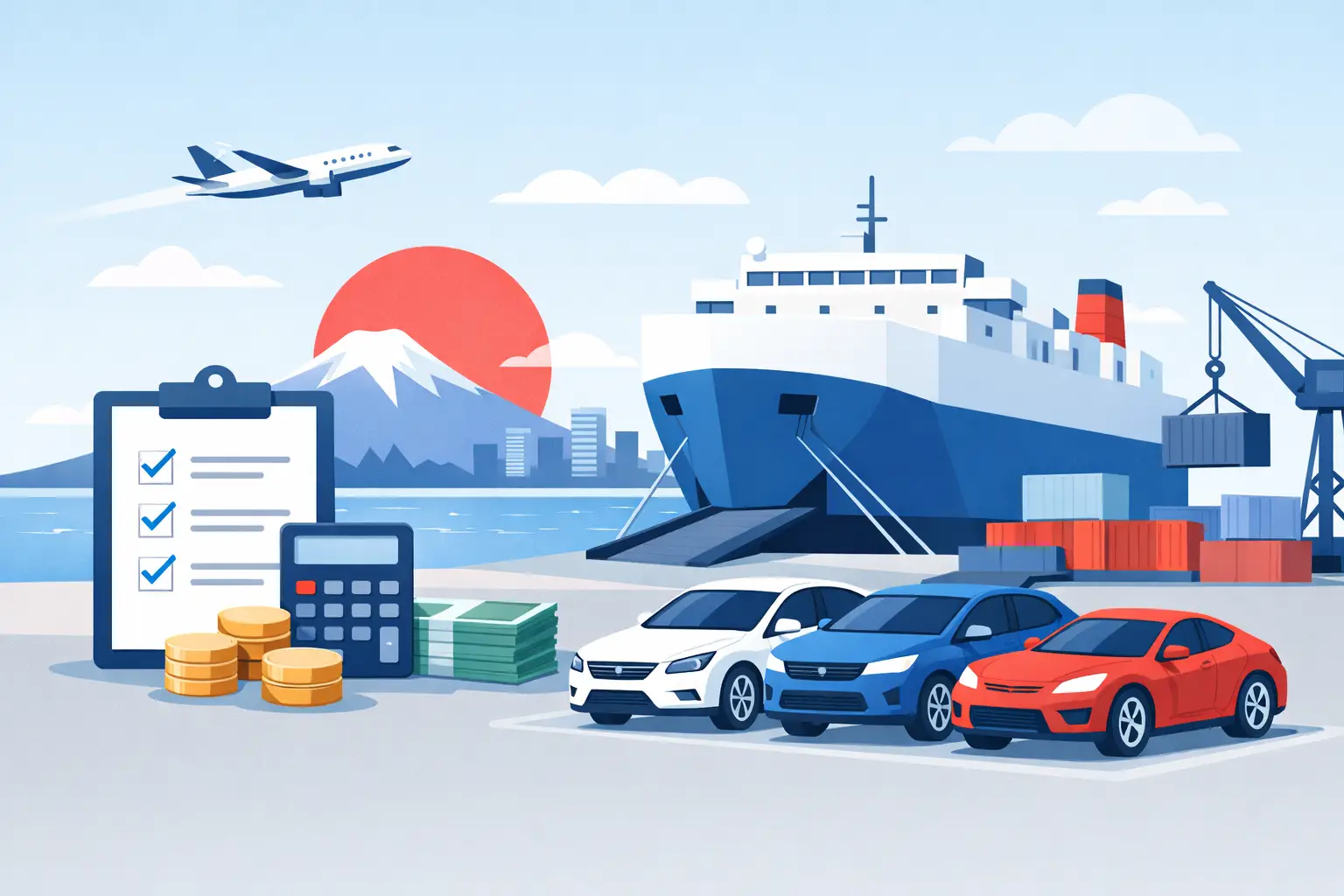
The price on a Japanese auction listing is never the full story. If you are comparing vehicles and wondering why the final landed cost feels higher than the hammer price, this is where japanese car export fees explained really matters. The smartest import buyers are not just chasing a cheap bid – they are watching every fee between the auction floor in Japan and the port in their home country.
That does not mean the process is packed with hidden costs. It means each stage has a job to do. When the fees are presented clearly, importing from Japan becomes far easier to plan, and a lot less stressful. That is exactly what buyers need, especially if they want access to strong value, rare JDM models, or better-condition vehicles than they can find locally.
Japanese car export fees explained from start to finish
Most export costs fall into a few simple categories: buying fees, Japan-side logistics, shipping charges, documentation, and destination-country costs. Some are fixed or close to fixed. Others depend heavily on the vehicle, the shipping method, and the destination port.
The first number buyers usually see is the auction or sale price. That is the amount paid to secure the vehicle itself. If you are buying through live auctions, there may also be an auction house fee. This is separate from the vehicle price and is charged by the auction company for handling the sale. It is a normal part of the Japanese wholesale market.
Then comes the exporter or agent fee. This covers the service side of the transaction – bidding support, communication, auction sheet translation, invoicing, payment coordination, documentation, and export handling. For many overseas buyers, this is where the real value sits. Without an experienced exporter, the lower Japanese market prices can quickly be erased by mistakes, delays, or a bad buy.
After purchase, the car has to move through the Japan-side process. That can include inland transport from the auction yard to the exporter’s facility or port, temporary storage if shipping is not immediate, and port handling. If the vehicle is far from the departure port, inland transport can be a meaningful part of the total. A car bought near the port may cost much less to move than one coming from a rural auction location.
What shipping and paperwork fees usually cover
Shipping is often the biggest variable. The two most common methods are RoRo and container shipping. RoRo, short for roll-on/roll-off, is usually more affordable for standard running vehicles because the car is driven onto the vessel. Container shipping can cost more, but it may make sense for high-value cars, non-running vehicles, added parts, or destinations where container service is more practical.
Ocean freight rates rise and fall with season, route demand, fuel costs, and port congestion. That means the same car can cost noticeably more or less to ship depending on timing. Buyers sometimes assume shipping should be steady year-round, but the market rarely works that way.
There are also documentation fees on the Japan side. These may include export certificate processing, bill of lading issuance, customs export clearance, and related paperwork required to legally move the vehicle out of Japan. These charges are not glamorous, but they are essential. If the paperwork is wrong, the whole shipment can stall.
Some exporters also include inspection-related costs where required. Depending on the destination country, the vehicle may need radiation checks, fumigation coordination, emissions-related preparation, or pre-export inspections. This is one of those areas where it depends on the destination. A fee that matters for one buyer may not apply at all to another.
Insurance is another optional or recommended cost. Marine insurance is not always mandatory, but many buyers choose it for peace of mind, especially on higher-value units. If you are importing a sought-after performance model or a newer vehicle, insurance can be a wise layer of protection rather than an easy cost to cut.
The fees buyers forget when budgeting
When people ask for japanese car export fees explained, they often mean Japan-side charges only. But if you want the real number, you have to think in landed cost, not just export cost. That means adding the expenses waiting at your destination.
Once the vehicle arrives, you may face import duty, customs entry fees, port charges, local handling, storage if the car is not collected quickly, brokerage fees, and state-level registration or compliance expenses. In the US, the age of the vehicle, EPA and DOT rules, and the exact import pathway all matter. A 25-year-old JDM car may be much simpler to import than a newer vehicle that does not meet federal requirements.
This is where first-time buyers get caught off guard. They budget correctly for the car, the exporter, and the shipping, then forget the arrival-side costs. The result is not that importing is a bad deal – it is that incomplete budgeting creates frustration. A serious exporter should help you understand which costs happen in Japan and which ones will show up after the car lands.
Currency movement can also change the final number. If you are paying in US dollars while the source costs are tied to Japanese yen, exchange rate changes can work for you or against you. On a lower-priced car, the swing may feel minor. On a more expensive vehicle or multi-unit purchase, it can be significant.
Why fee transparency matters more than a low headline price
A very low quote can look exciting at first, but you need to ask what is actually included. Some sellers advertise only the vehicle price and leave out inland transport, documentation, port charges, or service fees until later. Others give a more realistic all-in Japan-side figure from the start. The second approach is not less competitive – it is just more honest.
That honesty matters because import buying is built on timing and trust. You may be bidding quickly, deciding between several auction units, or trying to lock in shipping on a narrow schedule. If the fee structure is vague, every decision becomes harder. If the fee structure is clear, you can move with confidence.
This is where a hands-on export partner earns their place. A good team does not just process paperwork. They explain where the money goes, what is fixed, what changes, and which options may save you money without cutting corners. SKY MARK AUTO works in exactly that lane, helping buyers understand the full transaction rather than just the auction result.
How to estimate your import cost without guessing
Start with the vehicle price and then add every major layer. Include the auction fee if applicable, the exporter service fee, inland transport in Japan, port and documentation charges, ocean freight, insurance if selected, and destination-country costs. If any category is still unknown, do not treat it as zero. Treat it as a pending cost and ask for a realistic range.
It also helps to compare two or three candidate vehicles with total cost in mind, not just bid price. A cheaper car from a distant auction yard with high inland transport and needed repairs may end up costing more than a slightly pricier unit closer to port and ready to ship. This is especially true with enthusiast cars, where condition and completeness affect value long after the purchase.
Ask direct questions. Is the quote based on RoRo or container? Does it include customs export clearance in Japan? Are there storage charges if the next vessel is delayed? Is marine insurance included or separate? Will the car need any destination-specific inspection before export? Serious answers to those questions can save you from expensive surprises.
For dealers and repeat buyers, the calculation gets even sharper. Volume can improve efficiency, but multiple units also multiply risk if the fee picture is unclear. Predictable pricing is what allows a small dealer or reseller to buy aggressively and still protect margin.
The real advantage of understanding fees is not just avoiding overpayment. It is buying better. Once you know how Japanese car export fees work, you can spot genuine value, compare options more accurately, and move on the right cars when they appear. That is when importing stops feeling complicated and starts feeling exciting for all the right reasons.
A great Japanese import should deliver more than a good auction win. It should arrive with the numbers making sense, the paperwork handled properly, and no unpleasant surprises between Japan and your driveway.