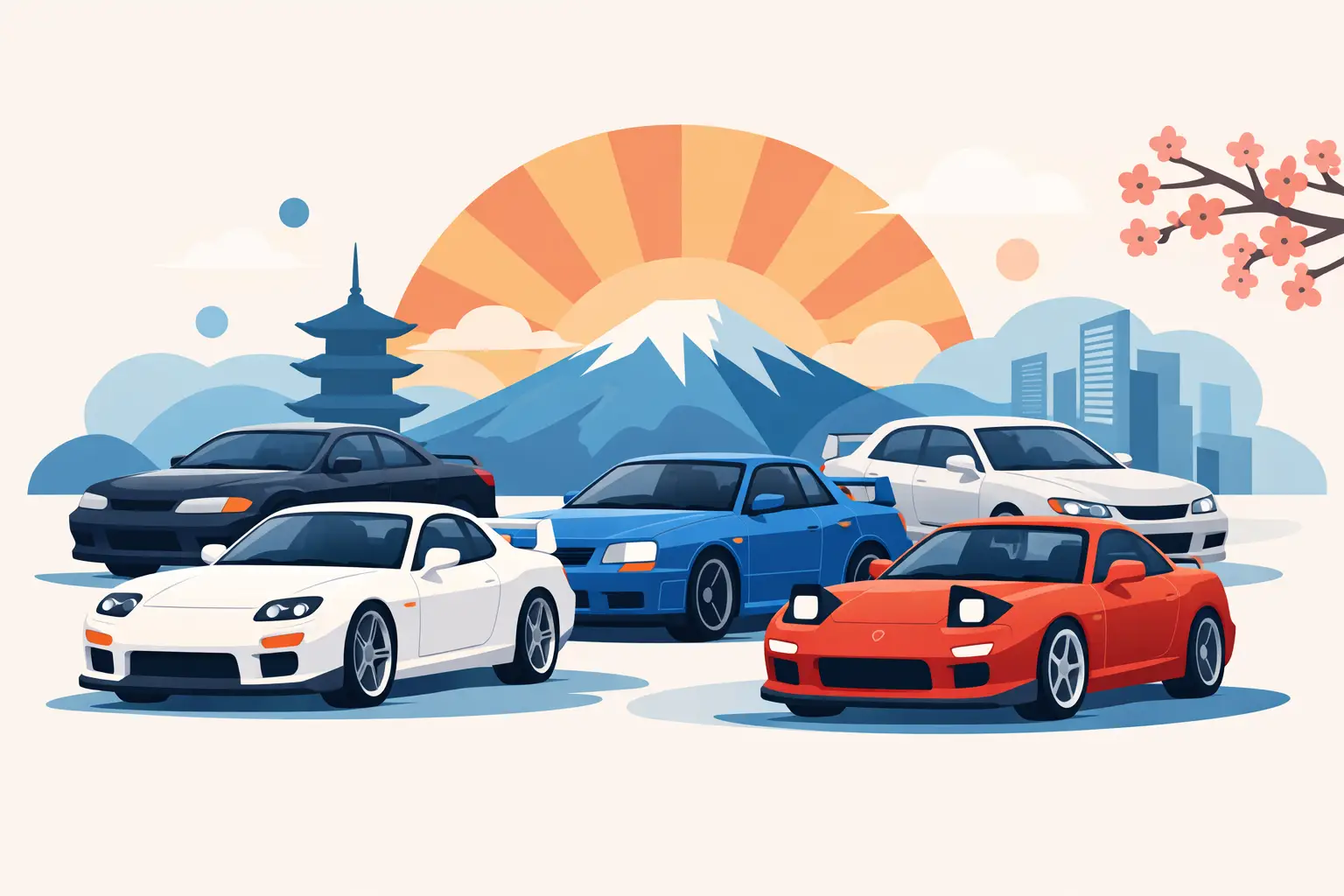
Your first JDM car should make you want to drive it more, not spend every weekend chasing parts, fixing mystery issues, or regretting an impulse buy. That is why the best JDM cars for beginners are not always the loudest, rarest, or most hyped models. They are the cars that give you real Japanese-market character without turning ownership into a full-time project.
For most first-time buyers, the right beginner JDM car comes down to a few simple questions. Is it reliable enough to enjoy regularly? Are parts and service realistic in your market? Is the price still reasonable? And if you are importing, can you buy with confidence instead of guessing your way through auction sheets, shipping, and paperwork? Get those answers right, and your first JDM experience becomes exciting for the right reasons.
What makes the best JDM cars for beginners?
A beginner-friendly JDM car needs more than a cool badge. It should have a reputation for solid mechanicals, decent parts availability, and a driving experience that feels special even at normal road speeds. A car does not need huge horsepower to be rewarding. In fact, for many first-time owners, lower running costs and easier maintenance matter more than big performance numbers.
The other big factor is condition. A great model can still be a bad first buy if it has hidden rust, accident history, or poor modifications. That is where buying from Japan can work in your favor, especially when you have access to inspection information and support with the process. A clean, honest example of a modest car will usually beat a cheaper but heavily abused hero car.
10 best JDM cars for beginners
Mazda MX-5 Miata Roadster
If you want a pure driving experience without overwhelming complexity, the MX-5 Roadster is hard to beat. Lightweight, balanced, and simple to maintain, it gives beginners a real connection to the road. It also teaches good driving habits because you carry speed through corners instead of relying on brute power.
The trade-off is space. It is small, and if you need rear seats or daily practicality, it may not fit your life. But as a first JDM sports car, it is one of the safest bets on the board.
Honda Civic Type R EK9
The EK9 has real JDM credibility and a strong reputation for sharp handling, high-revving fun, and Honda reliability. For buyers who want something iconic but still usable, it sits in a sweet spot. It feels special without being impossible to live with.
The obvious catch is price. Clean EK9s are no longer cheap, and the best examples get attention fast. If your budget stretches to it, though, it is one of the most rewarding beginner performance cars from Japan.
Honda Integra Type R DC2
The DC2 is often praised for good reason. It is focused, responsive, and one of the best front-wheel-drive performance cars ever built. For a beginner who wants a serious driver’s car, it delivers an experience that still feels thrilling today.
That said, this is not the budget option it once was. Insurance, availability, and clean-condition pricing can push it out of reach for some first-time buyers. If you find a well-kept one, buy the condition first and the hype second.
Toyota Altezza RS200
The Altezza RS200 is a standout choice if you want rear-wheel-drive balance and a sedan body. It gives you a sporty chassis, a high-revving engine in the right trim, and a design that still looks properly JDM without screaming for attention.
For beginners, it offers a nice middle ground. It is more practical than a two-seat sports car and usually less intimidating than higher-powered turbo options. Just make sure you understand which engine and transmission you are getting, because that changes the ownership experience quite a bit.
Nissan Silvia S15 Spec-S
A lot of buyers jump straight to turbo Silvia models, but the Spec-S deserves real attention as a first JDM car. It has the looks, the chassis, and the street presence of the S15 without the added stress of buying a boosted car that may have lived a very hard life.
This is one of those it-depends choices. If you want the Silvia shape and rear-wheel-drive feel without chasing maximum power right away, the Spec-S makes sense. If you are expecting instant turbo hero status, you may feel tempted to modify too quickly.
Toyota Chaser Tourer S
The Chaser has become hugely popular, and for good reason. It has classic Japanese sedan style, strong road presence, and a layout enthusiasts love. For beginners, the Tourer S can be the smarter buy over the turbo Tourer V because it often comes with lower costs and less risk.
It is still a larger car, so it may not be the easiest first step for someone who wants a light, tossable coupe. But if you want a JDM sedan that feels substantial and has room to grow with you, the Chaser is a strong candidate.
Subaru Impreza WRX
For buyers in areas with rough weather or those who want all-wheel-drive confidence, the WRX is appealing from the start. It offers real turbo performance and a huge enthusiast following, which helps with knowledge and parts support.
The caution here is ownership history. Many WRXs have been modified, driven hard, or maintained inconsistently. That does not make them bad beginner cars, but it does mean inspection and buying support matter a lot more than they do on simpler models.
Mitsubishi Lancer Evolution IV to VI
An Evo is not the cheapest beginner option, but it can still work for the right buyer. These cars are exciting, capable, and loaded with JDM presence. If your budget is healthy and you want something more intense from day one, an Evo has serious appeal.
Be honest with yourself, though. Running costs, insurance, and condition risk are all higher here. This is a beginner choice only if you are financially prepared and committed to buying carefully.
Suzuki Cappuccino
The Cappuccino is one of the most fun ways to enter JDM ownership on a smaller budget. It is tiny, unique, and full of charm. For buyers who want something different from the usual mainstream picks, it delivers character in a big way.
Its size is both the attraction and the limitation. Taller drivers may struggle, and highway use can feel less relaxed than in larger cars. But if you want a lightweight kei sports car with true Japanese-market personality, it is a brilliant first step.
Nissan March Super Turbo or Honda Beat
These are niche choices, but that is exactly why some beginners love them. The March Super Turbo is quirky and rare, while the Honda Beat offers open-top fun and a high-revving kei car experience that feels unlike anything else.
These cars make sense if you value character over outright speed. They are less ideal if you want easy local parts access or broad mechanic familiarity. For the right owner, though, they turn every drive into an event.
How to choose the right beginner JDM car
Budget comes first, but not just purchase price. You need to think about shipping, registration, insurance, maintenance, and the inevitable small fixes that come with older imports. A car that looks affordable at auction can become expensive if it needs tires, suspension work, interior repairs, or rust correction as soon as it arrives.
Next, be realistic about your use. If this is a weekend toy, a smaller sports car may be perfect. If you need something for regular driving, a sedan like an Altezza or Chaser may fit much better. If you are new to performance cars, naturally aspirated models often make the learning curve easier and ownership less stressful.
Finally, buy condition over fantasy. The best first JDM car is usually the cleanest, most honest example within your budget, not the most famous name. A lower-spec car with strong history can be a far better experience than a top-tier badge hiding expensive problems.
Buying from Japan without the usual beginner mistakes
This is where first-time importers either gain confidence or lose money. Auction grades, repair history, underbody condition, and originality all matter. So does knowing whether a car has been modified in ways that help or hurt long-term reliability.
A hands-on export partner can make a huge difference, especially if you are bidding from overseas and cannot inspect the car yourself. Support with auction sheet translation, bidding strategy, paperwork, shipping coordination, and port delivery removes a lot of the guesswork. For buyers who want access to Japan’s real market without handling every moving part alone, that guidance is not a luxury. It is protection.
SKY MARK AUTO helps bridge that gap by giving buyers direct access to Japanese vehicles with practical support from selection to shipment. That means less confusion, more transparency, and a much better chance of getting a JDM car you will actually enjoy owning.
Your first JDM car does not need to be the biggest flex in the parking lot. It needs to start strong, feel right, and make you excited for what comes next. Choose carefully, buy with clear eyes, and let your first import be the one that keeps you hooked for all the right reasons.