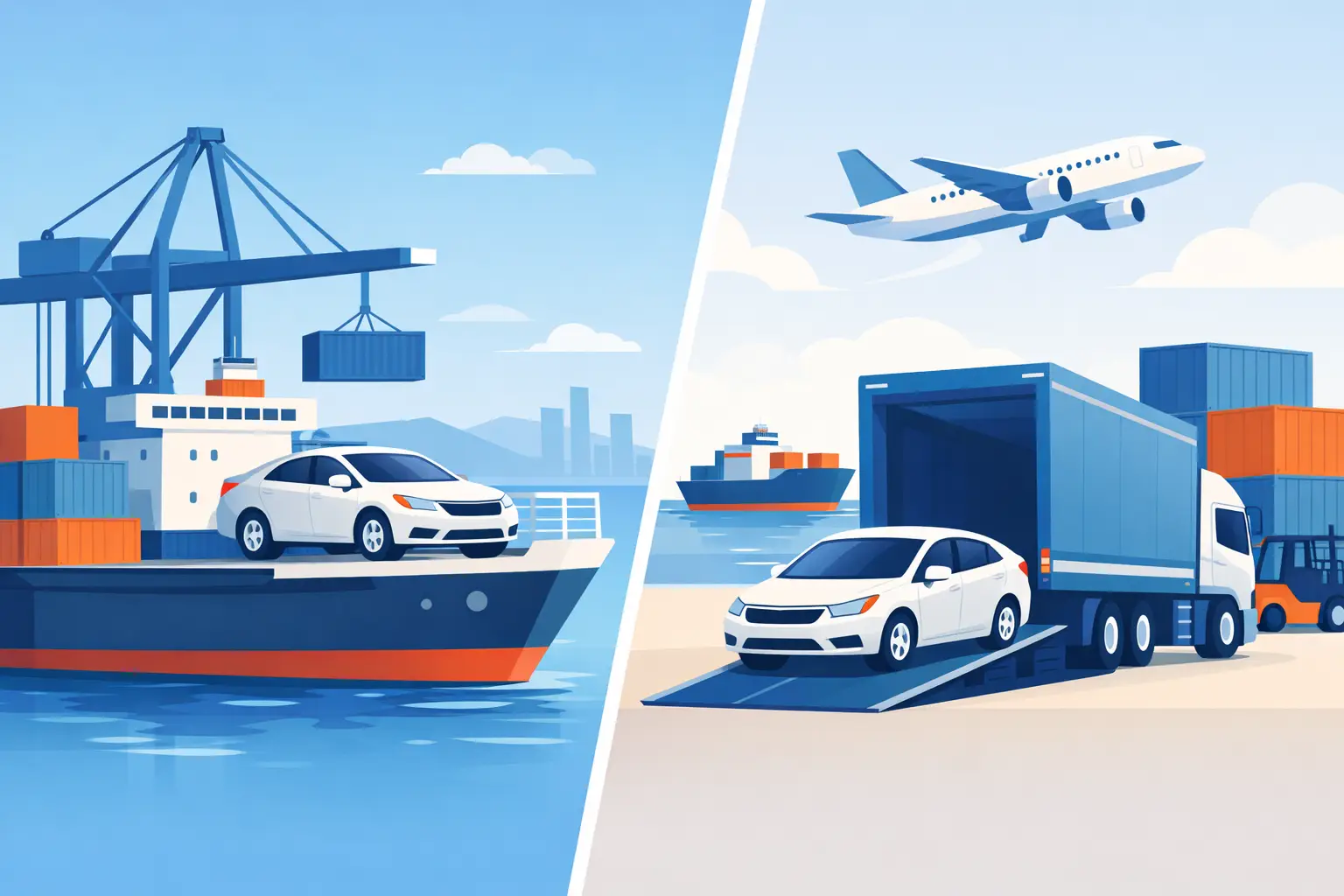
A low auction win can feel like a huge victory – until you compare shipping quotes and realize the advertised number was not your full landed cost. That is why understanding FOB price vs CIF price matters before you bid on a Japanese vehicle. Both terms can be legitimate ways to quote an export vehicle, but they cover very different parts of the journey from Japan to your destination port.
For JDM enthusiasts, first-time importers, and dealers, the right choice is not always the cheapest number on the listing. It is the option that gives you a clear view of what you will pay, who controls the shipping, and where your responsibility begins.
FOB Price vs CIF Price: The Core Difference
FOB means Free On Board. In a typical Japanese vehicle export transaction, an FOB price covers the vehicle and the costs required to prepare it for export and load it onto the nominated vessel at the Japanese port named in the agreement. Once the vehicle is on board, the buyer generally takes responsibility for the ocean freight, marine insurance, and costs that arise after departure.
CIF means Cost, Insurance, and Freight. A CIF price includes the vehicle price, ocean freight to the named destination port, and a basic level of marine cargo insurance arranged by the seller. It gives buyers one combined export-and-shipping figure to the port of arrival.
The simplest way to see it is this: FOB gets your car onto the ship in Japan. CIF gets it to the destination port, with freight and insurance included in the quoted amount.
That does not mean CIF is a door-to-door price. In most cases, neither FOB nor CIF includes import duty, local taxes, customs broker charges, destination terminal fees, compliance work, registration, or transportation from the port to your driveway.
| Cost or responsibility | FOB | CIF | |—|—|—| | Vehicle purchase price | Included | Included | | Export preparation in Japan | Usually included | Usually included | | Loading at named Japanese port | Included | Included | | Ocean freight | Buyer arranges or pays separately | Included to named destination port | | Marine insurance | Buyer arranges or pays separately | Included at the agreed level | | Destination port charges | Usually buyer responsibility | Usually buyer responsibility | | Customs, taxes, and inland delivery | Buyer responsibility | Buyer responsibility |
Why the Lower FOB Number Is Not Always Cheaper
FOB pricing is often attractive because the initial figure looks lower. If you are experienced with international shipping, have a trusted freight forwarder, or are importing multiple vehicles, FOB can offer useful control. You can compare carrier schedules, choose a RoRo or container option where available, and negotiate shipping costs independently.
But control comes with work. You need to secure a booking, coordinate documents with the exporter and shipping company, confirm insurance coverage, and understand what your destination agent will charge. A freight quote that looks competitive can still exclude documentation fees, terminal handling, delivery order charges, storage exposure, or other local costs.
CIF can be the more practical option for a buyer who wants fewer moving parts. The exporter arranges the ocean freight and insurance to the agreed port, so you have a clearer early estimate of the vehicle-plus-shipping cost. That is especially valuable when you are chasing a specific auction car and need to decide quickly whether the full purchase is within budget.
Still, CIF should never be treated as an all-inclusive import quote. Ask exactly which destination port is named, which carrier or sailing is planned, what level of insurance is provided, and which charges will be collected after arrival. Transparency beats surprises every time.
The Detail Many Buyers Miss: Risk Can Transfer Before the Car Arrives
One of the most misunderstood points in FOB price vs CIF price is risk. Under standard Incoterms rules, risk commonly transfers from seller to buyer once the goods are loaded on board the vessel at the port of shipment. This can apply even under CIF, despite the seller paying for freight and arranging insurance to the destination port.
In plain terms, CIF means the seller pays for shipping and insurance, but it does not necessarily mean the seller carries every risk until you collect the vehicle in the United States or another destination market. The insurance is there to protect against covered transit losses, subject to its terms, limits, and claim process.
For a used Japanese car, ask what the insurance covers. Confirm whether it is basic cargo coverage or broader protection, whether the declared vehicle value is accurate, and what evidence may be required if damage occurs. Take clear condition photos and retain your auction sheet, invoice, export certificate, bill of lading, and inspection records. Those documents matter if a claim or customs question arises.
What Is Usually Not Included in Either Quote
The vehicle’s route does not end when it reaches the port. Whether you buy FOB or CIF, your real import budget should account for the costs that happen on the destination side.
For US buyers, that can include customs entry, duty where applicable, harbor or terminal charges, broker fees, port storage if pickup is delayed, and domestic transport. Federal and state requirements may also apply depending on the vehicle’s age, type, and intended use. A 25-year-old Japanese domestic market vehicle can follow a different import path than a newer vehicle, so do not assume that one buyer’s experience applies to every car.
Your location matters too. A CIF quote to Baltimore is not directly comparable with one to Jacksonville, Los Angeles, or Tacoma. The ocean freight, sailing schedule, destination handling, and onward trucking can all change. Always compare quotes to the same destination port and ask whether the figure is for RoRo shipping or container shipping.
How to Compare Quotes Without Getting Misled
When two exporters quote different terms, bring both offers to the same basis before deciding. Do not compare an FOB vehicle figure with a CIF figure and assume the lower one is the better deal. Add the missing freight, insurance, and expected destination charges to the FOB quote first.
A smart comparison starts with the same vehicle, same Japanese departure port, same destination port, and same shipping method. Then verify whether export paperwork, auction fees, inland movement in Japan, radiation inspection where required, and marine insurance are included or separate.
It also helps to ask for the quote in a simple itemized format. You should be able to identify the vehicle cost, auction-related charges if applicable, export handling, freight, insurance, and any known destination-side estimate. If a seller cannot explain the numbers clearly, the lowest headline price may become the most expensive purchase later.
At SKY MARK AUTO, buyers can receive hands-on guidance from auction translation and bidding through export documentation and shipping coordination. That support is especially useful when the right car appears at auction and you need to make a confident decision without decoding Japanese paperwork or chasing multiple service providers.
When FOB Makes Sense for a Japanese Import
FOB is often a strong fit when you already have a freight network and want to manage the shipping side yourself. Dealers importing several units may prefer to consolidate logistics, negotiate volume freight rates, or work through their own destination agent. Buyers shipping to less common ports may also find that arranging freight independently gives them more options.
FOB can also be useful if timing is your priority. If you have an established carrier relationship, you may be able to select the sailing that best fits your schedule. Just make sure every handoff is clear. Confirm the deadline for booking instructions, the exact port of loading, and who sends each shipping document.
When CIF Is the Better Choice
CIF is often the calmer route for first-time importers and individual enthusiasts buying one special vehicle. You know earlier what it will cost to move the car from Japan to your chosen port, and the exporter handles the vessel booking and cargo insurance arrangement.
It can also make sense when you value convenience more than controlling every freight detail. Buying a classic Skyline, a turbocharged kei car, or a clean family van should be exciting. A clear CIF figure lets you focus on the vehicle’s condition, auction grade, history, and import eligibility rather than trying to become an ocean-logistics expert overnight.
The best choice depends on your experience, destination, shipment volume, and appetite for coordination. FOB may reward a buyer with established shipping resources. CIF may be worth more for the clarity and support it provides.
Before you place a bid, ask for the named ports, confirm every included charge in writing, and build a realistic destination-side allowance into your budget. The right Japanese import is not just the one that wins at auction – it is the one that arrives with no costly surprises waiting at the port.